|
|
|
The History of Amateur Radio
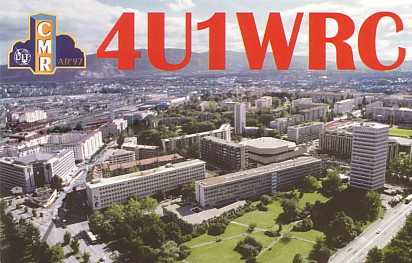
China is awaked (XVIII) Although China was still an underdeveloped country until the 1970s, "thanks" to president Teng Tsiao Ping, today things have changed. And how much ! Knowing the difficulties to emit from a close country like China, the fact that they lift the ban on amateur emission in 1992 can be interpreted as a positive attitude from the government, even if it is limited. The "radio sports" as they call this activity is managed by the Chinese Radio Sports Association (CRSA) since April 3, 1964. Thanks to the assistance of radio amateurs came from abroad, CRSA helped beginners to win their license. CRSA has also organized the Amateur Radio Emergency Service as well as radio clubs in schools and youth centers at the one display at right. CRSA has successfully boosted the amateur community in China. In 2000 there were only 500 amateur stations, there were 3,500 in 2003 and there were about 20,000 radio amateurs in 2010. Yes, China is awaked ! But economically speaking, this time, it's our turn to wake up : today, the growth rate reaches 10% in China, twice to 4 times faster than in the U.S.A. or in Europe ! Early 2000, our leaders were not aware of the econcomical risks they encured. Today, with the growing number of products "made in China" exported all over the world, they do. But our economical laws do not protect us against the invasion of low cost chinese products. We can only prohibit their sale if their are defective. I hope that our leaders will soon hear the alarm howling. In the negative many of our small entreprises will close down. For sure, in the frame of rules edicted by OECD and WTO, the best solution should be to find a mutual economical agreement that please all parties. History will judge. But times are changing. If in 2010 China was always the 2d world power behind the U.S.A., the young South Korea knocks at our door. Its growth exceeds 6% for a GPD over 30000$ per capita. After the japanese products made by Sony that invaded the world, very soon everybody will possess an electronic device - and of quality - made by Samsung (they manufacture TV, monitor, cell phone, camcorder, compact camera, fridge, MP3, OLED, etc.). In some years, South Korea will become the 7th world power. World Target : a code-less license While the US FCC re-instituted three classes of licenses, Technician, General and Extra, and had already allowed Novices to work on HF bands since 1951, in many other countries like in Europe most of the time there was only two classes of licenses, A and B, HF and VHF and up respectively, equivalent to the US Extra and Technician. But amateurs of class B, who didn't pass the Morse test, had no privilege on HF bands. It was a fact that through the world, many VHF licensed amateurs were reluctant to learn Morse code that looked outdated, including the US army that publically stated that crypted modes were much more efficient and secure than CW.
As we have just told, from the 1980s or so, many radio clubs see their population slowly decreasing and their members had in average over 40 years of age if not older. Of course the Morse code was not the only one to blame, and the life in a city is not always compatible with the desire of radio amateurs who want to erect large antennas to work on HF. For this reason and some others many beginners gave up this activity to the benefit of more efficient technologies. In this morose context, many VHF licensees gave up this hobby by lack of interest and means. The problem stayed an open question during more than 20 years. The new generation was no more interested in amateur radio, all the less under the constraint of having to learn radioelectricity, sometimes to a high technical level, and still less the Morse code. Since the '90s Internet through its email system, chats and other Messenger provides two-way contacts of much better quality than shortwaves, including video conferencing capabilities when associated to a webcam. What could propose an old-fashion challenger like ham radio ? The national administrations as well as IARU and ITU were well aware of this problem, and since the mid '90s we observed that there was a trend to "alleviate" the difficulty level of the various privilege license classes, and some countries reduced the speed of the Morse examination from 20 or 15 WPM to 5 WPM. Compared to the years '70s, it was already a huge progress that permitted to many SWLs not always very involved in radioelectricity to become amateur radio, even if they were limited to VHF and above frequencies, but it was for them a first step to the conquest of HF. Rested to learn the Morse code and to reach the 5 WPM. Allez, Courage ! WRC 2003 At the October World Radiocommunications Conference 2003 of Geneva (WRC 2003), the 189 members of ITU decided that the condition previously mandatory of bearing an examination on the Morse code to operate below 30 MHz was suppressed. The decision to apply or not this condition was however left with the free appreciation of national administrations. IARU governing body warmy supported this resolution and called all national administrations for the removal of Morse code as an examination requirement to operate on HF.
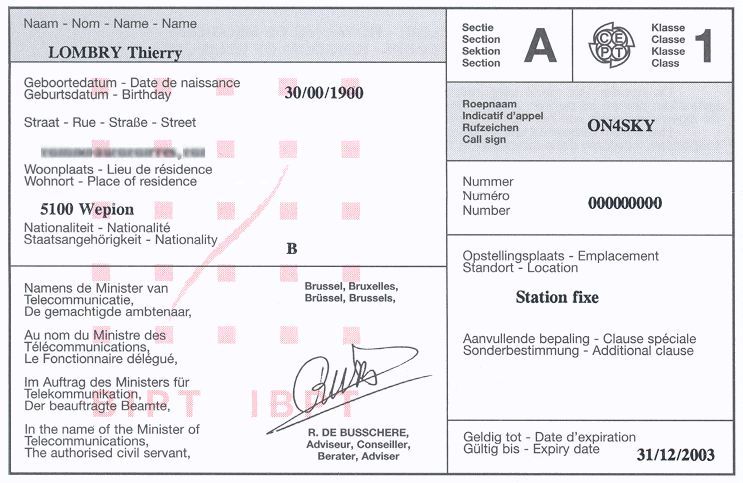
Fine said all amateurs limited to VHF and above frequencies, and not very familiar with the telegraphy... Indeed, this opportunity opened the HF bands to tens of thousands new amateurs. Welcome to you ! However, at the same time, the IARU Administrative Council recognized Morse code as "an effective and efficient mode of communication used by many thousands of radio amateurs." It also took into account ITU-Radiocommunication Sector (ITU-R) Recommendation M.1544, which sets down the minimum qualifications of radio amateurs. Hence the creation of several new licenses like the Novice license in some countries (see above). The effects of WRC 2003 were immediat. Practically, many countries including small entities like Belgium, Luxembourg, Hong Kong or Papua New Guinea decided to suppress the Morse examination immediately. Most European countries didn't wait for the ratification of the treaty by the European Commission, and assigned full privileges to all hams requesting the change of their VHF license for an HF one, although the classification listed on their HAREC certificate was still B (access to all bands over 30 MHz without Morse code !). However administrations from G, DL and LX among others have wished that the old VHF amateurs keep their call sign although other countries accepted the call sign change. For example, in Germany or in Holland, DO or PO is a VHF callsign prefix. Their respective administration allowed the owner of such calls to work on HF with all privileges but in using their old call. Most other countries should follow this movement, but the United States for example has kept the Morse examination (at the speed of 5 WPM) while facilitating the access to the HF bands to novices and technicians. However the FCC has the intention to revise the status of the famous "Element 1", the 5 WPM Morse test as they have received many petitions requesting its immediate removal. But currently outside Europe, the European HAREC certificate is the only one valid, wathever the Class listed on your amateur license. That means that all non-US citizens carrying an US license have to apply for a visitor license.
CEPT licenses and the rest of the world On October 2003, the T/R 61-01 document was approved by CEPT countries met at Nicosia, Greece. What does it mean ? This ratification means that the owner of an european VHF license can emit in the HF bands from any country at the condition that this country implemented Appendix 1 point 2 of this document. That will be probably not the case in San Marino or Andorra (see the document) as these countries have not ratified this recommendation yet. This question arrived at such a stupid level of administration that in 2004 some european countries like France always refused to give rights on HF bands to amateurs of class B although WRC 2003 permitted to all VHFists to work on HF, including for a three-month period, abroad. However, preceeding the ideas expressed at WRC 2003, an arrangement was signed on March 21, 2002 between CEPT (Conférence Européenne des administrations Postales et des Télécommunications) and CITEL (Inter-American Telecommunications Commission) as well as with ATU (African Telecommunications Union). This arrangement should help ITU in the development of telecommunications an code-less licenses outside Europe. That means that if non-European countries haven't sign the T/R 61-01 document yet, generally they "support" the principle, as for example Israël, Peru, Canada or the U.S.A. But until now you cannot exchange your HAREC B certificate for an Extra US license yet without passing an examination. Most recent news 2004 : Professor Villard, SK On January 7, 2004, Oswald Garrison "Mike" Villard, W6QYT, "Mr SSB" was Silent Key at the age of 87. Let's pay tribute to a brillant man. Note that a part of this article is extracted from Stanford University website. Born on 17 septembre 1916, in New York City, Mike grew up in New York and Dobbs Ferry, N.Y., one of three children of Villard and Julia Breckinridge Sandford. He attended Yale University, where he received a bachelor's degree in English literature. While his parents hoped he would go into journalism, Professor Anthony C. Fraser-Smith of the electrical engineering department. remembered that "Mike really broke free after that, because he really loved radios."
Mike Villard entered Stanford University, where he became a graduate student under the celebrated electrical engineer Fred Terman. He became an associate professor in 1938, before receiving his Ph.D. His doctoral work was interrupted by World War II, during which he and Terman worked together at the Radio Research Laboratory at Harvard. After the war, in 1949, Mike finally received his doctorate at Stanford. Among his most famous works, Pr Villard helped play a pioneering role in long-distance radio communication by studying how radio signals bounce off the ionosphere. He also emphasized the value of "Meteor Scatter" activity. Pr Villard worked on the development of "over the horizon" radar that can see targets beyond the horizon and "stealth" techniques for preventing aircraft from being detected by radar and submarines from being detected by sonar. During the Cold War, he developed techniques for preventing Soviet jammers from blocking Voice of America transmissions to Soviet-dominated countries. According to his biography at SRI, Pr Villard also developed an antenna that "permitted people in oppressed countries to receive ... Voice of America radio programs in spite of efforts by governments unfriendly to the United States to block that information. Later, Chinese students in this country, outraged by the Tiananmen Square student killings, translated into Cantonese Mike's write-up for the antenna design." Professor Villard was named SRI Fellow in 1988 for his contributions to national defense. Mike Villard is survived by a daughter, Suzanne, nd two sons, John of Martha's Vineyard, and Thomas. Plans for a memorial service at Stanford University are pending. 2004 : France dropped code In May 2004, after many discussions, France dropped code requirement; class 2 licensees gained access to HF but they are not allowed to work in CW.... this is probably the only country that denies this right. But it not the first time that France is in contradiction with worldwide accepted rules. 2005 : Jack Kilby, SK Jack Kilby, inventor of the integrated circuit, died on 22 June 2005. Remember that Kilby was employed engineer at Texas Instruments in 1958 where he spent his summer holidays - one of the seldom companies to grant them - to work on the problem in circuit design that was commonly called the "tyranny of numbers" (of components). Finally he came to the conclusion that manufacturing the circuit components "en masse" in a single piece of semiconductor material could provide a solution. A patent for a "Solid Circuit made of Germanium", the first integrated circuit, was filed on 6 february 1959. In addition to the integrated circuit, Kilby is also noted for patenting the electronic portable calculator and the thermal printer used in data terminals. In total, he held about 60 patents. From 1978 to 1985, Jack Kilby was Distinguished Professor of Electrical Engineering at Texas A&M University. Kilby retired from Texas Instruments in 1983.
2005 : first ham tourist in space On October 1, 2005, the first civilian amateur radio, Greg Olsen, KC2ONX, presented at the boarding of the russian space rocket Soyuz for a eight-days trip onboard the International Space Station ISS. Greg Olsen is an american millionaire, retired business man of 60. He was the third civilian space "tourist". He spent two years training and paid $20 million dollars for the trip ! In parallel, american and japanese societies are developing this very promising market of space tourism to name Virgin Galactic and Space Adventures. 2006 : FCC eliminated the Morse code exam While many foreign regulators have already removed the Morse code exam, atthe end, in July 2005 FCC suggested to drop the famous "Element 1", the 5 WPM Morse test, from the Amateur Service rules (Part 97), as they have received thousands petitions requesting its removal. FCC argued that the Morse code will be dropped from all classes of licenses in order to "encourage individuals who are interested in communications technology, or who are able to contribute to the advancement of the radio art, to become amateur radio operators." One year later, on December 15, 2006, FCC eliminated the Morse code exam requirement. Today, nowhere in the world we hear about Morse at radio amateur examinations. A page is turned. Dear key, you that gives rhythm to our QSOs, you became a silent key... But don't worry, CWers will not leave you. 2014: 4-m band is open There was some years that IARU discussed about the allocation of the VHF 70 MHz (4-m band) to amateurs in Region 1 (Europe, Africa, Middle East), this segment being partly used by the Army and TV channels. Since 2014 the 70.000-70.500 MHz segment is assigned to amateurs who can work in CW and AM/FM. It also includes FM channels and beacons. However, the segment that amateurs can use depends on countries, e.g. : in PA, UAE and GB all the range from 70.000 to 70.500 MHz is available while it is narrower in ON (70.190-70.410 MHz) or in LX (70.150-70.250 MHz). You will find more details on IARU website and in the download page (Excel sheets). 2015 : WRC approved the 60-m band The 5 MHz band was already in use officiously since 2003 in several countries like USA, UK, Norway, Finland, Denmark, Ireland and Iceland thanks to agreements with their national administration. Officially, the 60-m band will enter into force on 1 st January 2017 and will be assigned as secondary basis and low power means.The new amateur band is ranging from 5250 to 5450 kHz with limited powers from 15 W to 25 W EIRP depending on the country (15 Watts EIRP in Regions 1 and 3, 20 Watts EIRP in Mexico and 25 Watts EIRP in Central America, South America and most of the Caribbean area). This 60 m allocation bridges the propagation gap between the 80 m and the 40 m bands with the advantage to maintain stable communication over various distances for the whole 24 hours. In addition, a small allocation of 15 kHz between 5351.5-5366.5 kHz was eventually approved, a first in HF since the WARC of 1979. This close temporary our review of the history of amateur radio and its extension in many new areas of wireless. If you want, we can discuss in the next page the future of communications, trends, and what we can expect from new technologies; a fascinating perspective. To read: The future of communications For more information Although this story ends nowadays, it is open to the future; this is an endless adventure, and more than once I had to stop my explanations to not transform this huge file in true archives spread on binders and binders, sorry, on kilobytes and kilobytes of data ! So, instead of impose you such a reading, I prefered to stop here and to suggest you some additional readings. You will thus find hereunder some very interesting links of websites dealing with the history of wireless as well as some other sources of information that try to have an encyclopedic approach in this matter. Do not forget either, the links included here and there in the text, ham books and probably your national magazine that surely reserved some pages to this subject. About pictures, most are protected by a copyright or at least by a gentleman agreement. If you want to publish some of them, do please contact first the owner of the document following the link provided below the image (when available). If you want to print this file, do not use your Internet Explorer as the right part of the text will be probably cut. The simplest method is to make a copy/paste of each page in a Word document. Then justify the all presentation, and it will be ready for printing. At last, if in spite of my checks you still see here or there, at the corner of a paragraph or at the end of a page, a mistake, I would appreciate that you send me a feedback with the correction so that all readers have all data in hands without any error. For more information Books and magazines about amateur radio
QST, Amateur Radio and the Rise of SSB, ARRL, Jan 2003 QST, Amateur Radio: 100 Years of Discovery, ARRL, Jan 2000 (PDF) CQ, 70th Anniversary Issue, Jan 2015 CQ, The Past 50 Years of Amateur radio, Jan 1995, Collector's Edition CQ Magazine January 1945, CQ Archives 200 Meters and Down, Clinton B. DeSoto, 1936, regularly reprinted by ARRL The World of Ham Radio, 1901-1950: A Social History, Richard A.Bartlett, McFarland, 2007 (Google version) National Geographic magazine, October 1904 (PDF), "The Special Telegraphic" (pages 411 to 415) • A telegraphic signal sent out from the Naval Observatory of Washington, D.C., was received throughout the world in far away locations such as Fiji, Lisbon, Suez, and Bombay. On Internet Ham Radio History, ARRL and al. Library of Congress (American memory) RigPix (ham hardware database) Phil's Old Radio (vintage radios, magazine, supplies) QST magazines from 1916 to 1941 (to download) A Tribute to Morse Telegraphy, The telegraph Office All About the Telegraph and Deciphering Morse Code Text, Emissary History of the Atlantic Cable & Undersea Communications Western Historic Radio Museum (1910-1950s) Gerard's Radio Corner (pictures of vintage radios) American Museum of Radio & Electricity W1TP Telegraph & Scientific Instrument Museums United States early Radio History, by Thomas H. White USA Amateur Radio History and licensing, by AC6V The Dawn of Amateur Radio, by Norman F. Joly Amateur Radio 1965, N4MW History of the Derby and district amateur radio society, U.K., since 1911, DADARS (by email) PV Scientific Instruments (replica of classical electric apparatus for sale) Timeline of the 20th century events, PBS Wikipedia, the free encyclopedia Tim Berners-Lee at CERN: Invention of the Web, YouTube Tim Bernes-Lee Talks and Articles, W3 Web Nation Master (world statistics) CIA - The World Factbook, CIA world statistics) In French VE2AIK, 50 ans de radioamateurisme au Canada Les débuts du radio-amateurisme en Belgique, ON4PS UBA, Histoire de l'UBA (dans la rubrique "UBA") Docteur TSF (histoire et liens) Musée Les Sanglots longs (Réguiny, Bretagne, F). About this history In 2004, extracts of this history were used by Ian Grinter and Kevin Crockett, VK3CKC, to write the academic cursus on Technological pathway to the modern HF transceiver in the frame of the australian Advanced Diploma of Electronics. "It's a nice summary of the history of Amateur Radio", Joel P.Kleinman, N1BKE, Managing Editor QST, ARRL "Your dossier was added to the Web Links section. Thank you Thierry! ", Tom Hogerty, KC1J, ARRL Web Services. This site is listed under Ham Radio History links (TIS section, where you will also find a link to my propagation pages). "Wonderful work!! Congratulations!!", Mitsuhiro SUGAWARA, JN1LQH, Manager International Section, JARL "Bravo! You've done a wonderful job! This is a work of which you should be very proud", Dick Ross, K2MGA, Publisher CQ magazine. "This is a truly amazing piece of work! Congratulations on a true masterpiece ! I would definitely like to add a link to it on the museum site - it is an incredible resource!", John Jenkins, The Spark Museum. "I am very impressed with your site - thank you for your work [...]. We have an "Education Hour" once a week for one hour and we read material, and have talks over amateur radio [including the reading of some of the] material presented in your great "History of Amateur Radio"", Ron Bertrand, VK2DQ, Radio & Electronics School (closed in 2011 then restablished). "Thank you for your wonderful work about hamradio history. We have printed it and use as a study and divulgation document in our Club. We just wanted you to know how useful is and that we are using and enjoying it", Galdino Besomi, CE3PG, CE3AA - Radio Club de CHILE.
|
||||||||||||||||||||||||||||||||||