|
|
|
The future of communications
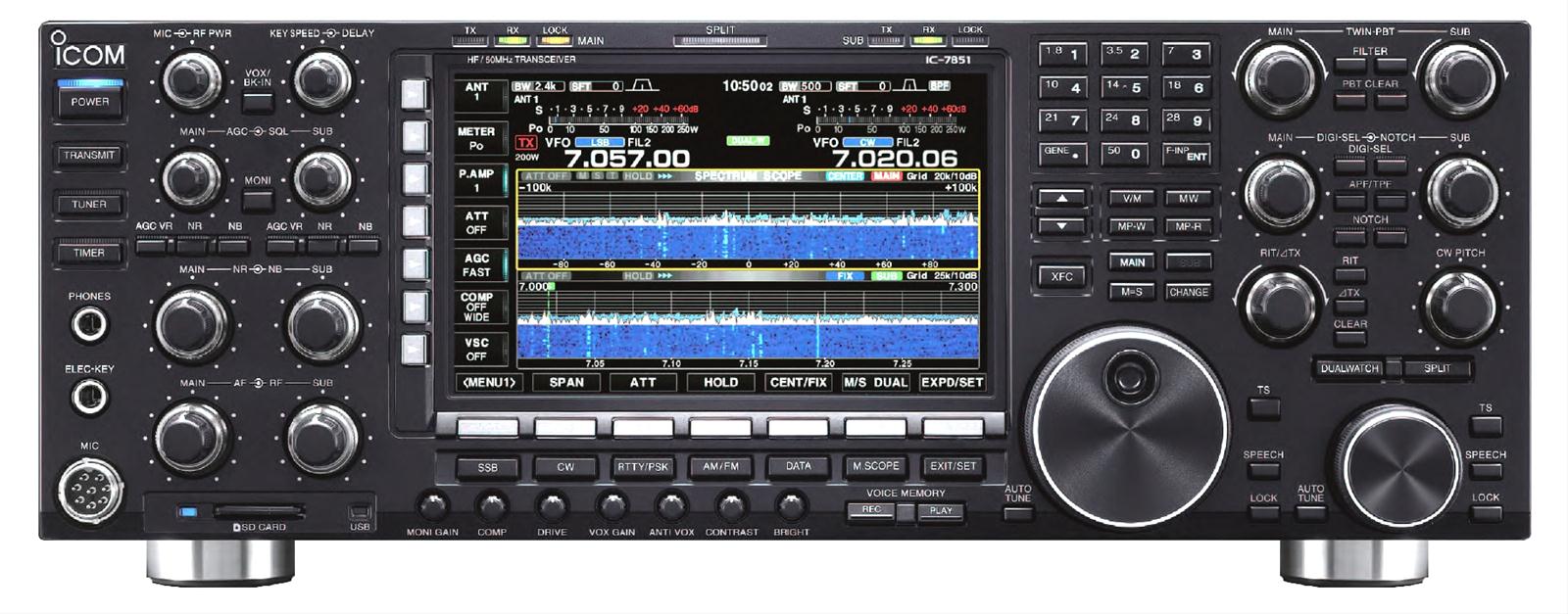
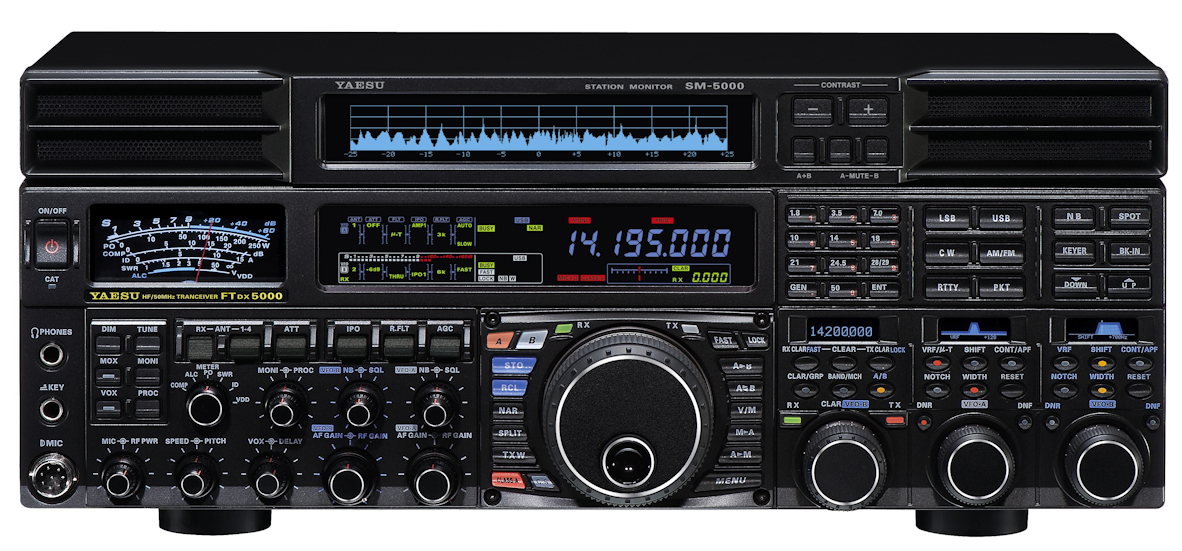
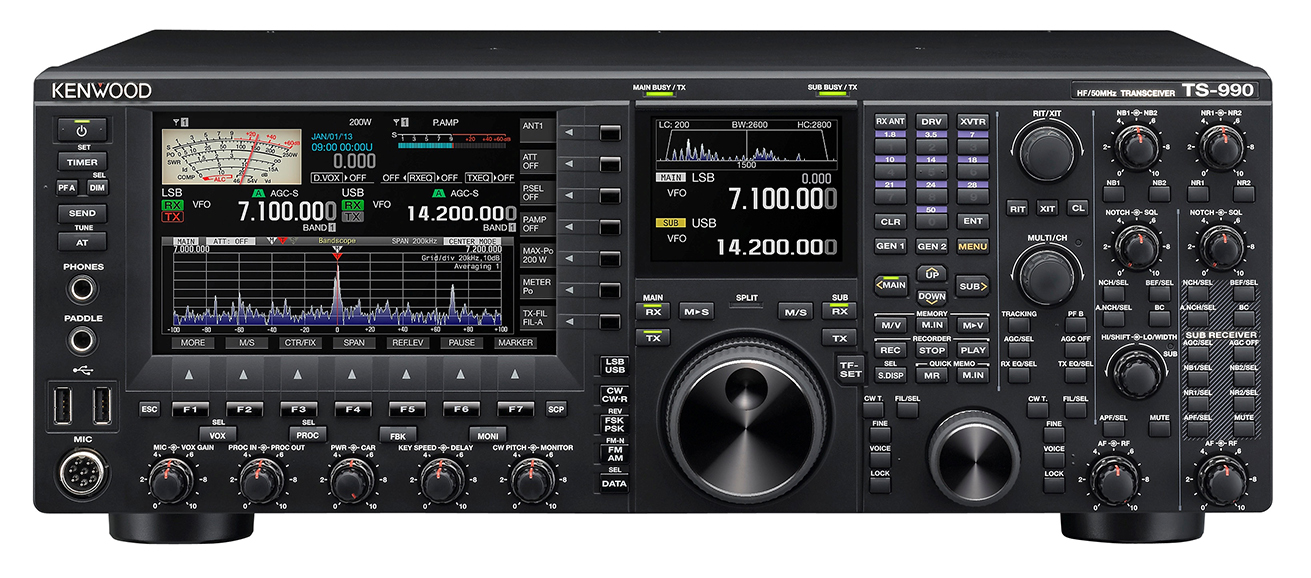
Toward a digital world (I) Today amateur radio is an activity that is enjoyed by more than one million active people worldwide. Over 3 million licenses were released in 2004. This activity allows advanced amateur scientifically minded or simple curious to develop new technologies, to experiment new concepts while allowing other amateurs to enjoy their activity like a pass-time. For over 100 years amateur radio provides a wide variety of interests for amateurs fan of shortwaves and has already conducted to several major discoveries among which of course the long distance telecommunications by shortwaves and the discovery of the ionosphere. How far all this can lead us ? Today no major company involved in the wireless and shortwaves business is able to imagine what could be the future of communications. The technology associated to this medium grows at such a fast rate and in so many different directions that it is virtually impossible to predict its developments over some years. New standards appear, disappear, merge together, without waiting the verdict of users. Hard in such conditions to foresee the future. One thing is however sure. The future of shortwaves is tightly related to the development of computers, digital communications, allied to the fast growing of Internet. Consultez ce document en français The interest for the digital technology lies in the ease of signal processing, whereas an analog system will never reach so spectacular results. The best proof of this trend is the fact that since the end of 1990's all manufacturers of radio equipments offer transceivers including a built-in computer and DSP functions, some providing also a TFT screen driven by the mouse. Here are for example three high-end HF transceivers displaying the best overall performances. These small gems of technology are worth between 8000 and 12000€ :
Caught in the web First there is Internet. In 2018, in Europe more than 85% of inhabitants used Internet (up to 99.6% in Norway) against 95% in North America. But in the world, only 54.5% of inhabitants have acces to Internet, hence the initiatives to grant access to Internet in rural areas by satellite. To read : World Internet Usage - Nation Master Internet : all at once a media, a network and a tool If you work regularly with this tool, you know how Internet can influence your behaviour as well as both your personal and professional activities. But how far can we go with Internet ? And is it useful and secure to use it or to extend the applications of this web omnidirectional ? Don't we risk to be "caught" by this huge web or worse, that major web companies (GAFA) tend to influence our decisions (cf. the Cambridge Analytica affair in 2018) ? These are among the major questions at which we must answer in a near future if we do not want to be surprised by some drawbacks and side effects of its usage.
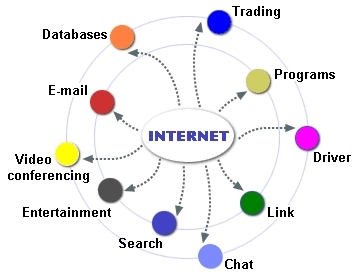
Let's analyze what became Internet and try to identify what should be avoided in using the web too intensively. Internet is not a media like could be the television or newspapers. Even if some radio and TV are available on the Internet in streaming audio/video, Internet is first of all a network, physical, connecting computers. Internet is also a tool including an electronic mailing system, chats and other conferencing means opening public spaces, and a concentration of knowledge bases accessible through browsers and search engines. But not everybody appreciates this new tool. And this is not only a subjective feeling, biased against the new technologies for some people not used to play with computers, but a fact linked to our representation of our society. First you need some basic knowledges of computing to use the computer and the different applications (automation office, mail, chat, browser, databases, etc). You need some cultural skills to understand what you read or what you want to find. The "global culture", at world scale, does not exist yet, like it does not exist about television. Each nation or economical entity has edicted its own rules, its habits and customs that are different in Europe from the ones in use in Africa, in Asia, in Pacific or in North or South America. Your culture is almost personal to your country or to your life style, hence the difficulty to find the same interest for Internet to an amateur living on an island lost in the Pacific ocean for example, and to an amateur living at center of large capital city in Europe or in the U.S.A. To read : World Internet Usage Internet and the computing security Besides criminal organizations and pornography largely spread over Internet, there is the very serious problem of viruses. Tens of new viruses are dispersed every day on the web, most coming from the new free eastern republics, which population is often unemployed but qualified.
When your computer is under attack and that a virus damages or deletes your files, the time lost to remove the infection and recover the information can represent a couple of days of work and, for companies, much money. Nobody really appreciate these criminal actions made by these new cyber-terrorists. According to statistics from Nation Master, in 2002 close to one Belgian on two was surfing on the Internet although this support didn't exist 20 years before ! But only 2.5% of them use a wide band access (DSL or cable modem) although the country of almost covered at 100% with cable TV. This means that most users worked with a classical modem and their low speed phone line with all risks of hacking that this technology conveys. Indeed, a study conducted in 2004 by Symantec highlighted that one Belgian Internet user on three was victim of piracy of his phone line by malicious programmers. Currently Internet providers and P&T administrations are unable to prevent these fraudulent actions. At best they can install an anti-virus system of the server handling your mailbox and secure your password authentication. For the remaining potential issues, only an Internet watch department as it exists to the Economy Ministry or a cyberpolicy unit could investigate these questions. Hopefully, today Internet users are aware of these possible intrusions or weaknesses of systems, and install software and other firewall to protect their data. With the widespread of fiber optic lines, we can also improve both the quality and the security of communications. But implementing hardware or software security features is not enough to protect a system against malevolent actions. About 30% of the protection can be installed at hardware or software level and perform very well in identifying, authenticating and granting users's access on the different networks. But 70% of the protection concern the users' awareness to computing security issues.
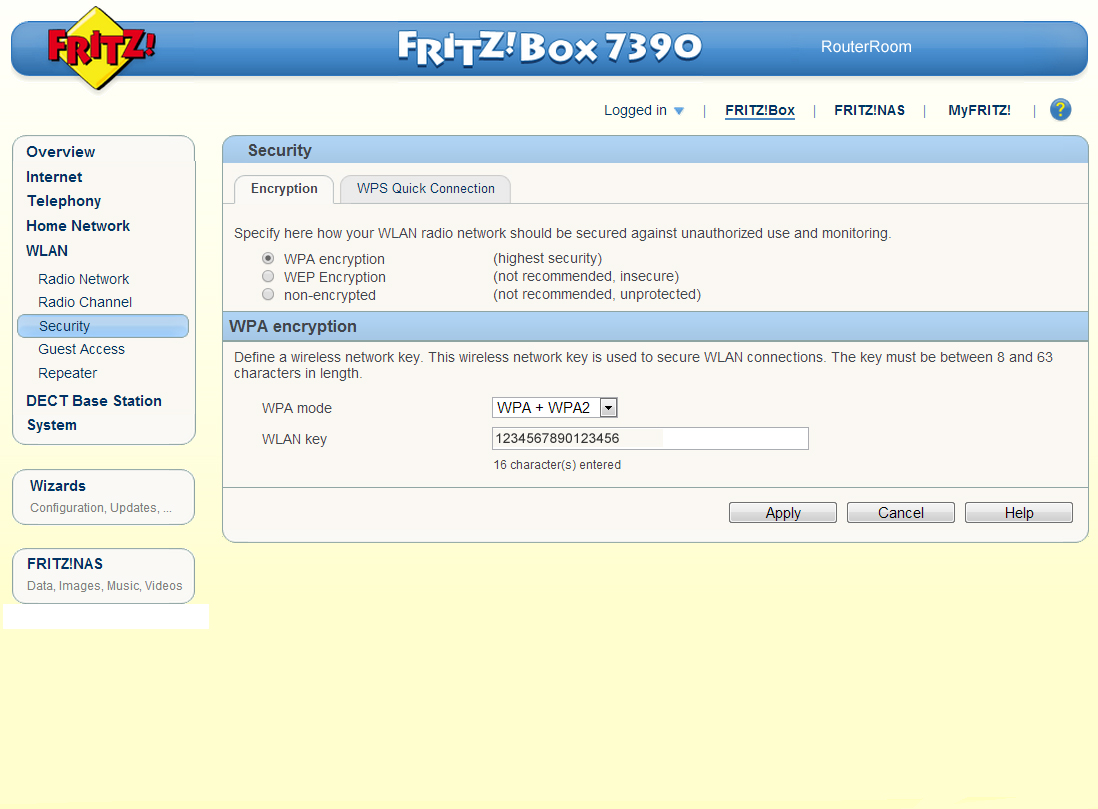
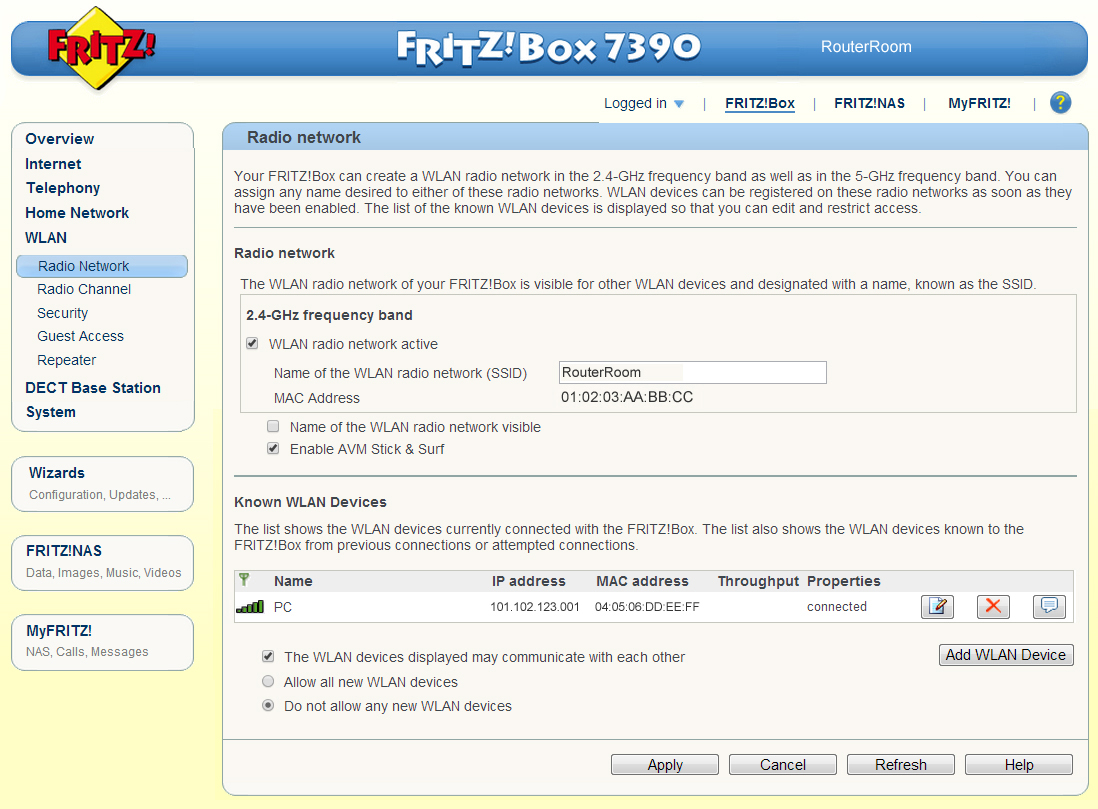
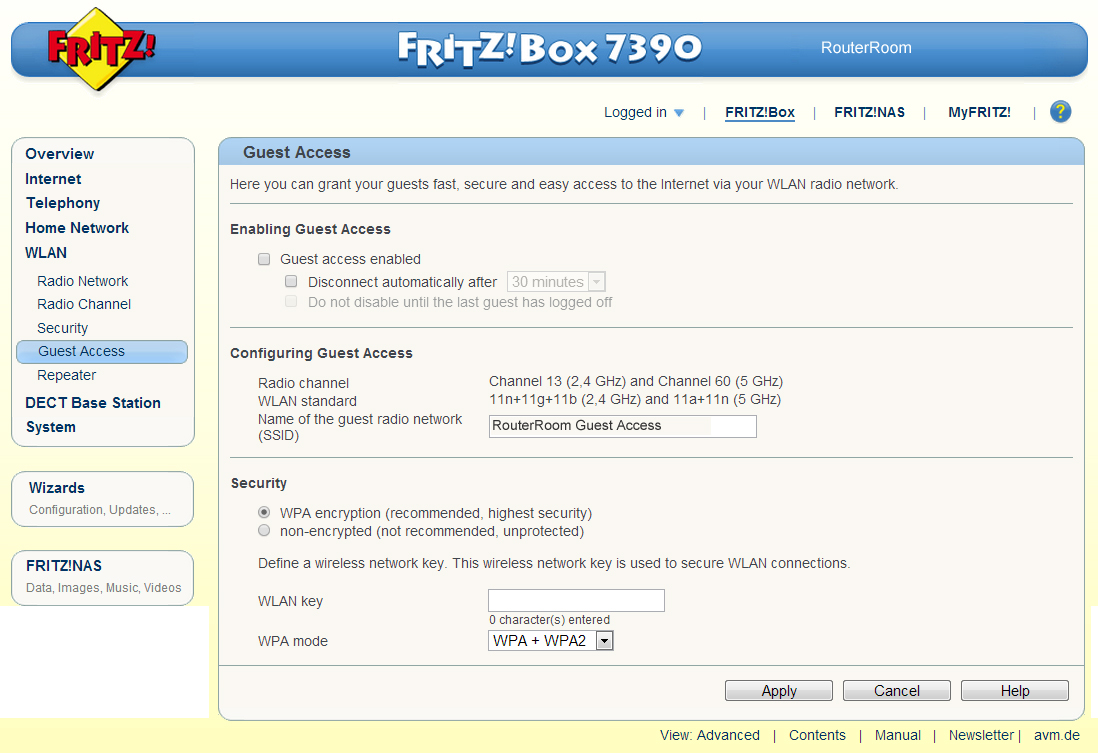
Take an example : you know that there are viruses on Internet. You are currently connected on Internet. Do you have installed an anti-virus on your computer to prevent any attack ? And is it updated ? If not, you are a weak link of the web as viruses can multiply and spread to other computers from your one. This traffic occurs under cover. If you did, you have been aware to the importance of IT securities issues, and I congratule you. In the contrary, make a break and take a look at Kaspersky whose efficiency of anti-virus solutions is no more to demonstrate. Indeed, the products of this company count among the best on the place. Wi-Fi connections are also sources of potential issues. Without protection on your computer, you could be victim of hackers. Indeed, if your Wi-Fi access is not secured, from the street or another building, a pirat could access to your PC and read your document as it worked from your keyboard ! To prevent such abuses, protect your Wi-Fi connection : active the WPA2 AES encryption, do not display your modem or Wi-Fi router (SSID=1), and install a long password with optionally a code generator. See this explanation and below screendumps for more details. That said, according to tests made in Brussels (B) in 2006, 10% only of corporate Wi-Fi networks were protected against 75% of private subscribers. In other words, it seems that people working at home are more aware to the problem of pirating and protect their connection better than most professionals ! In fact, beside the cultural problem of Internet, there is an economical issue : currently nobody pays for this service. In our western economic world, capitalist, there are only two solutions at long-term : either the publicity will pay Internet, or the user. The side effect of this freedom is that there is no control, hence the widespread of viruses, hacking and other "denied of service" attacks. A minimum of regulation should be welcome if authorities want to know who uses the web, and to track for example the cyber criminality and all unlawful acts (malicious acts, terrorism, pedophily, cyber-prostitution, etc). Connect remotely to your Wi-Fi router : Fritz!box - Cisco/Linksys - Netgear/TP-Link Only available to web users whose computer is connected to a local router without access restriction
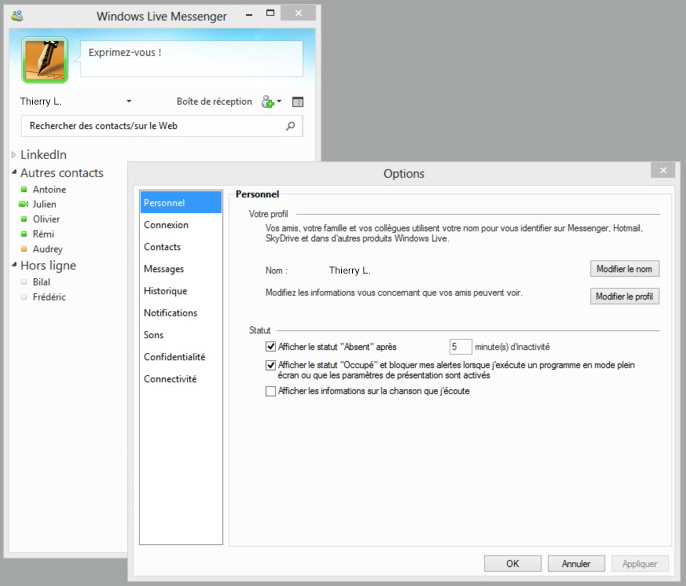
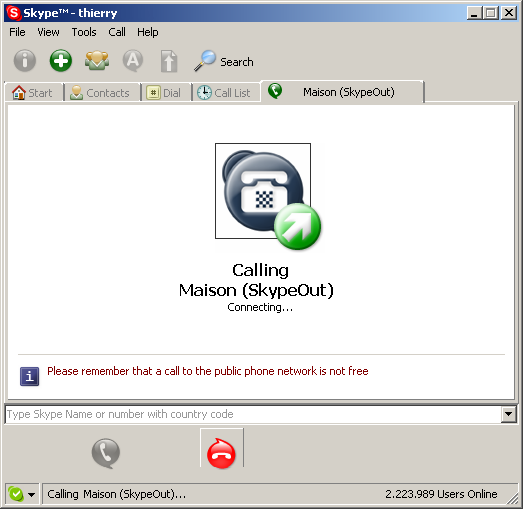
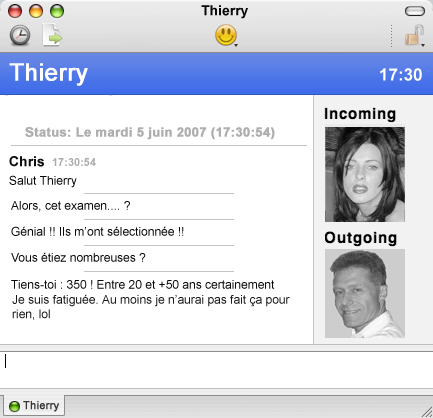
Nowadays, the offer provided on the Internet extends thus far ahead the means and the power of the regulation. Even the "simple" breach of copyrights is a task very hard to handle on the Internet. But we should not go too far and too fast with Internet. The support is till fragile, its technology is heavy, it is very sensitive to viruses and without any control. Why ? Because the ones who use it are not necessary the ones who feed it, the receiver is not the emitter, and usually end-user and developper do not communicate each with another. This is one of the many changes that a forecoming regulation should handle too. Internet is currently present in most sectors of the life, and many radio amateurs can no more work without it. In the future it will probably stay close to us or even on our clothes thanks to wireless flexible interfaces. Internet : support of communications The expansion of the Voice over IP (VoIP) technology is certainly a major direction of Internet. This environment combined with fiber optic lines supports both voice and data services with new features currently unavailable in the analog telephone network (using copper lines). This enhanced environment offers such high bandwidth that we can easy use at home or at work services as video teleconferencing in HD, video of demand, play online, CRM applications (customer relation management) integrated with voice services as well as voice mail, fax and e-mail messaging. As in past with "MSN Messenger" (withdrawed in 2012), today, a free instant messenger software like Skype allows you to communicate free of charge with other Skype users all through the world. You can also use this program to call via the Internet any correspondent having a phone number, fixed or mobile, anywhere in the world for the price of a local communication or almost (usually 0.017 € per minute, up to 0.2 € to some countries). Apple provides a similar solution with Adium. We could also name solutions from AOL or Yahoo among tens of others.
Once you have tasted to these tools and see the difference on your phone invoice, you can no more work without them, and especially teenagers. Indeed, according to a Nielsen-NetRatings study, in decembre 2004, 25% of French teenagers from 12 to 25 years old used instantaneous messenger services (like MSN or Yahoo Messenger). But conversely, in 2006, according to Mediappro, close to 60% of Internet users from 12 to 18 years old assert that they never communicate with unknown persons. They are right to mistrust when we know that chat rooms are also frequented by pedophiles and that some peer-to-peer networks like Gnutella (successor of Napster), receives daily close to 116000 requests related to pedophily ! In some countries, Internet is already available on the TV cable, sometimes via satellite or a fiber optic line. This high-end technology is fully transparent for the end-user. In option (by subscription), at your request, you can download on the NAS hard disk of your local Wi-Fi router your favorite films, radio broadcasts and RSS flows using a technology similar to DivX, MPEG and streaming, and be credited only for the time that you really spent to download (if it is not included in the offer). Today, new computers are sold with TV and Wi-Fi cards, and here and there according to your hardware you can already transfer easily data, images, sounds and video from one media to another : from Internet to the TV or to the computer, from the TV to the DivX DVD recorder or to the smartphone, from the computer to the TV or to the NAS hard disk of the Wi-Fi router, from the smartphone to the computer or to the TV, from the camcorder or the DSLR to the computer or any other combination. The "internet of things" or cyberobjects where each object or peripheral is identified with an IP address or an RFID signature is a reality.
BPL and other PLC trials tend also to demonstrate that everywhere new applications will soon be available across power lines and broadband communications. Is this a plus ? Well, not for everybody. Up to now all communication administrations have granted permissions to providers to tests these new mode of data transmission. They are thus participating in this evolution whatever the privilege of the ham community and broadcasters. It is only ask to providers to find a solution to avoid interferences with other services. But up to now the threshold of these RFI disturbs really too much the amateur traffic as well as broadcasters : the BPL signal reaches 28 μV (a strength of about S-8) in ham and broadcast bands although a radio communication cas already be established with a signal of 0.12 μV (S-1) when the correspondent is very weak ! Therefore in the U.S.A., after a flaring-up of BPL tests in almost all states, some providers were forced to stop confronted to trials introduced by privates due to their unability to reduce interferences. Despite this, trials continue elsewhere, including in many European countries, among them France, Belgium, Germany, Switzerland or Luxembourg, much to the detriment of radio amateurs and broadcasters. Let's hope that a solution will be find that will please all involved parties. This demonstration of high technology is impressing. View as a whole, with some chance the possibilities offered in the future thanks to the web will be amazing and, we all hope, useful to the community, allowing us for example to execute routine activities in a clic of a mouse or simply in pressing on a tactil screen. For short, the future of the Information Technology represents all together a surprizing frontier but unknown and unsecure. I do not want to afraid you, it reflects only a reality of our post-modern global world. Let's hope that the future will give us a smile and will be fantastic ! Second part The smartphone, the new radio access network
|
|||||||||||||||||||||||||||||||||||||||||